Wash Mitts

Wash Mitts

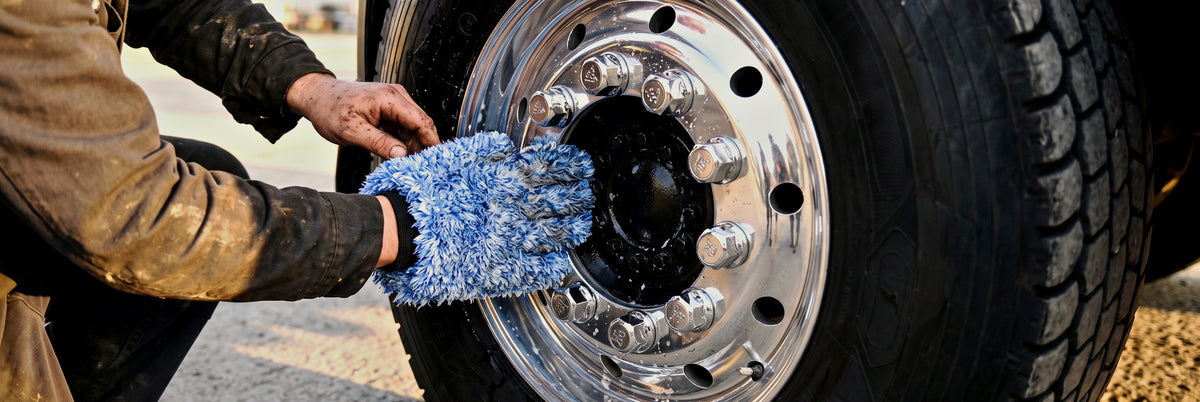
A wash mitt traps dirt in its fibres instead of dragging it across the paintwork. Find double-sided microfibre wash mitts for cars, trucks, motorhomes and motorbikes, available individually or in a set with the ZATO PUCK.

Wash Mitts

More on this topic Wash Mitts

A car wash mitt makes more difference to your paintwork than the shampoo does. It traps dirt in its fibres instead of dragging it across the surface, which helps prevent fine scratches in the clear coat. Here’s how to recognise a good mitt, which materials suit which jobs and what even the best mitt can’t prevent.

How a wash mitt protects paintwork — and what it can’t do

Fine scratches don’t come from the fibres themselves. They come from dirt dragged across dry paintwork. A mitt that holds plenty of water and shampoo keeps those particles suspended and carries them away. It’s the water the mitt holds, not the material itself, that helps prevent scratches.

What the adverts tend to leave out is that hand washing can still leave marks. AutoBild says so plainly in its test, and any promise of a ‘scratch-free wash’ goes too far. A good mitt can make the difference between marks you notice in everyday light and marks you only see when the light hits at a shallow angle.

Microfibre, lambswool or chenille wash mitt?

Microfibre wash mitts are the most common choice because they hold plenty of liquid and can be machine-washed at 60 °C. Lambswool is considered gentler but needs more care. Chenille, with its thick loops of yarn, holds plenty of suds but is harder to work into tight corners.

Don’t judge a mitt by how soft it feels when dry. The winner in the AutoBild test actually felt less fluffy dry than several of its rivals. How a material feels dry tells you nothing about how it glides over wet paintwork.

Two sides for different jobs

The usual advice is to have at least two mitts: one for paintwork and one for wheels. The reason is brake dust. It contains metal particles hard enough to leave visible marks the next time you wipe the mitt across a door.

Our double-sided wash mitt gives you two surfaces for different jobs: use the ultra-soft side on paintwork, glass and mirror-polished surfaces, and the denser side on dried-on insect residue. Wheels are still a separate job, and that’s where wheel cleaner comes in.

Never use the same mitt on paintwork and wheels Brake dust contains hard metal particles. Otherwise, whatever you pick up from the wheel can end up being dragged across the door.

How to wash your car with a mitt and avoid scratches

The order matters. Start with the wheels, where the coarsest, hardest dirt collects, and have your wheel brush ready. Then rinse the car from top to bottom with clean water to remove loose particles before anything touches the paintwork.

Next, use two buckets: one with car shampoo and one with clean water for rinsing the mitt. Wipe in straight passes rather than circles. Circular movements can leave marks that show up as holograms in sunlight. As soon as the mitt feels gritty, put it back in the rinse bucket instead of carrying on over the paintwork. That’s what the second bucket is for.

Wash mitts for cars, motorhomes and motorbikes

On a truck, it’s the size of the surface that matters. On a motorbike, it’s the shape. A round sponge can’t reach between spokes, behind trim or around the curves of a fuel tank, but a mitt that lets you work with your fingers can. That’s the practical reason for this design.

Paint on motorbikes and classic cars is often thinner or older than modern car clear coat. We don’t have reliable measurements for that, so keep it simple: use the soft side, plenty of water and light pressure. The PUCK care kit combines the mitt with aluminium polish for when you’re doing the wheels and tank in the same session.

Car wash mitt tests: what the results tell you

If you’re looking for a car wash mitt test winner, AutoBild is a good place to start. It tests mitts on film-covered acrylic sheets under an 800 g load, using quartz sand as the dirt. Scratch ratings from a test like this tell you more than a product description because the test can be reproduced.

What a test can’t tell you is how an entire category of material performs. It tests individual models at a particular time. We don’t have our own measurements for the absorbency or fabric weight of DR.POLISH mitts, so we don’t quote any. What we can say is what’s described above: two sides, high absorbency and an elasticated cuff.

FAQs about Wash Mitts

Do wash mitts scratch car paintwork?

A wash mitt causes fewer scratches than a sponge, but it won’t prevent them all. Fine scratches happen when particles are dragged across the paintwork. A highly absorbent mitt picks them up in its fibres instead of spreading them around. As AutoBild makes clear in its test, you can’t avoid scratches entirely. Rinsing first, using plenty of water and washing in straight passes matter more than your choice of material.

Which is better: a wash mitt or a sponge?

A wash mitt, for two reasons. A sponge has a closed surface that pushes particles ahead of it, while the fibres of a mitt pick them up and draw them in. Then there’s the shape: with your fingers, you can reach between spokes, behind trim and around the curves of a tank, where a round sponge would only touch the surface.

Can I put my wash mitt in the washing machine?

Yes, at up to 60 °C and without fabric softener. Fabric softener coats the fibres and reduces the absorbency you bought the mitt for in the first place. You’ll also see 40 °C recommended, sometimes on the same website as 60 °C. If in doubt, use the lower temperature.

Which is better for your car: hand washing or an automatic car wash?

Hand washing is better if you do it properly. In an automatic car wash, the same material runs over hundreds of cars, so grit from the car ahead can end up on your paintwork. But a poor hand wash can do more harm than a car wash, especially if you use a dry mitt, wash in circles and use just one bucket.

How often should I replace my wash mitt?

Replace the mitt if it still feels rough after washing or if the fibres are stuck together. Matted microfibre absorbs very little water, so it no longer offers the protection you bought it for. If you drop a mitt on the ground, don’t use it on paintwork again: grit can stay trapped in the fibres.

Free delivery

Delivery to Austria and Germany is free on orders of €140 or more.

SUPPORT

Got a question or need something clarified? Just email us any time at: info@DR-POLISH.at

SECURE PAYMENTS

Pay by PayPal, credit card, Klarna or advance bank transfer. Payments are encrypted through Shopify Payments.