Wheel Cleaners

Wheel Cleaners

A wheel cleaner removes brake dust, road salt and grime before you polish or seal the surface. Find ready-to-use alloy wheel cleaners, acidic concentrates and cleaning accessories for truck, car and motorbike wheels.

Wheel Cleaners

More on this topic Wheel Cleaners

A good wheel cleaner doesn’t wear away the finish. It only loosens what’s sitting on top. That may sound like a small distinction, but it determines whether the wheel comes up shiny or ends up dull and patchy after washing. The right cleaner depends on one thing, not on the type of vehicle: whether the wheel is coated or bare.

Let wheel cleaner loosen brake dust instead of scrubbing harder

Brake dust isn’t ordinary dirt. When you brake, hot metal particles come off the pads, hit the wheel and stick to it. Road grime, road salt and traces of grease build up alongside them. A wheel cleaner softens this layer so you can remove it with a sponge or brush.

This matters most on truck wheels, where deposits can sit for weeks after thousands of kilometres on the road. If you try to scrub them off without loosening them first, you’re more likely to scratch the surface than get it clean.

Acidic wheel cleaners can damage coated alloy wheels

The most common finish on aluminium truck wheels is Dura-Bright, a treatment developed by Alcoa. Rather than a coat of paint, the aluminium has an extremely thin protective layer that keeps it shiny. That also makes it delicate: acid can attack it and abrasive compounds can wear it away. The exposed patch then oxidises and no longer matches the surrounding finish.

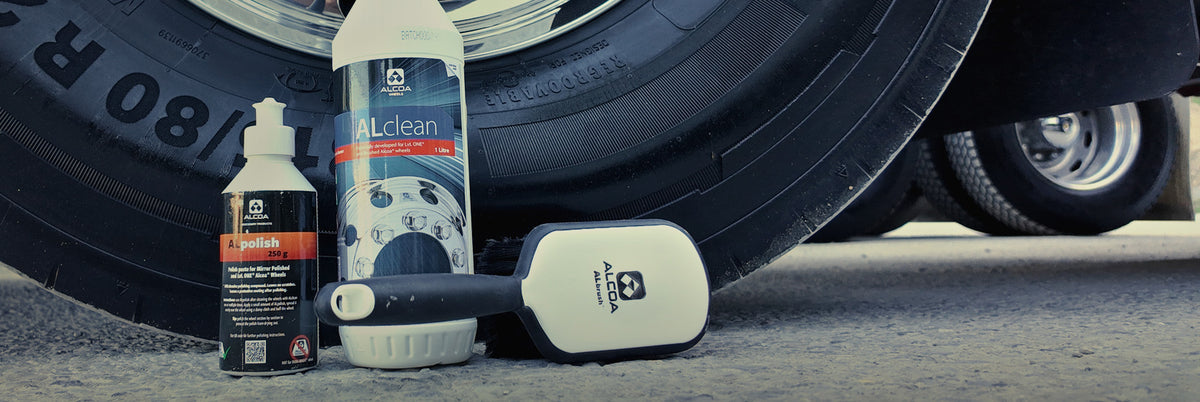
Alcoa specifies one cleaner for these wheels: Dura-Bright Wheel Wash. It comes ready to use, so don’t dilute it. Use it with a soft wheel brush with a rubber rim.

Keep acid off coated wheels An acidic cleaner dulls the Dura-Bright finish. You can’t bring it back; sanding would only remove the affected layer.

What a pH-neutral wheel cleaner means for the finish

A pH-neutral cleaner is neither acidic nor alkaline and doesn’t chemically alter the surface. Acidic products work faster, but they can attack chrome and coatings. ALclean is one such concentrate: it breaks down oxidation and salt corrosion on bare aluminium in one to two minutes, which is why it should never be used on a Dura-Bright wheel.

For Dura-Bright wheels, use only the pH-neutral Dura-Bright Wheel Wash.

5-litre wheel cleaner for workshops and fleets

If you’re washing four car wheels, a litre will last a long time. It’s a different calculation when you have twelve wheels to wash on an articulated truck. That’s why Dura-Bright Wheel Wash comes in 1-litre and 5-litre sizes. It’s ready to use, so a 5-litre container gives you exactly 5 litres of cleaner.

The calculation is different for a concentrate. Depending on how dirty the wheels are, dilute ALclean with water at a ratio of 1:1 to 1:3. One litre makes two to four litres of cleaner, but it’s only for uncoated wheels.

Spray bottle for individual wheels, pressure sprayer for larger jobs

ALclean only comes with a spray nozzle, and there’s a reason for that: aim the cleaner at the dirty spot rather than spraying it all over the wheel arch. A spray nozzle is enough for an individual wheel or the area behind the spokes.

That gets tedious when you’re cleaning several vehicles in a row. That’s where the 1.5-litre pressure sprayer comes in: pump it up once and you can empty the entire tank. It’s useful for quickly wetting surfaces before cleaning, not for precise application.

Wheel cleaner for cars and motorbikes

Car wheels are smaller, and the deposits tend to be fresher because they’re washed more often. The order is still the same: check whether the wheel is coated or painted, then choose the cleaner. Treat painted car wheels like coated wheels and avoid acidic cleaners.

On motorbike wheels, there’s also the limited space between the spokes. Brake dust collects in curves that a microfibre cloth can’t reach, so use a spray nozzle and a slim brush instead of a wash mitt.

Cleaning prepares the wheel; polishing brings out the shine

A wheel cleaner replaces neither polish nor sealant. After washing, the wheel is clean, but cleaning alone doesn’t make the finish glossier or give it more protection. The next lot of brake dust will stick just as readily.

For shine, polish by hand with ZATO PUCK from the DR.POLISH range. For protection, use Truck Wheel Ceramic. Don’t use ZATO METAL POLISH for this step: it’s designed for machine polishing tanks and stainless steel panels, and you can’t get into the curves of a wheel with it.

FAQs about Wheel Cleaners

Should you use a wheel cleaner?

Yes. If you leave brake dust on the wheel, it builds up and dulls the finish over time. A cleaner loosens the deposits chemically so you don’t have to scrub hard. For coated wheels such as Dura-Bright, washing with a suitable cleaner keeps the protective finish intact. Abrasives coarser than P8000 will wear it away.

Is wheel cleaner alkaline or acidic?

Both types are available. Acidic concentrates such as ALclean remove oxidation and salt corrosion in one to two minutes, but they can attack chrome and coated surfaces. Ready-to-use cleaners such as Dura-Bright Wheel Wash are gentler and take longer to work. The right choice depends on the wheel finish, not the vehicle.

Is it a problem if wheel cleaner gets on the brakes?

With mild, ready-to-use cleaners, this isn’t usually a problem. Strongly acidic concentrates are different: they can attack bare metal parts if left to dry. Aim the spray at the wheel itself rather than spraying indiscriminately into the wheel assembly, and rinse thoroughly before anything dries.

Should you apply wheel cleaner to dry or wet wheels?

Apply it to wet wheels. The cleaner spreads more evenly and won’t dry straight away, and rinsing first removes loose particles that could otherwise scratch the surface as you wipe. Cleaner that dries on warm metal can leave streaks. If the wheel is in direct sunlight, wait until it has cooled before you start.

What’s the best way to clean motorbike wheels?

Use a spray nozzle and a slim brush, as brake dust collects in the curves between the spokes. First check whether the wheel is painted or coated. If it is, skip the acidic cleaner and use a ready-to-use one instead. Rinse thoroughly afterwards so no residue collects in the corners.

Free delivery

Delivery to Austria and Germany is free on orders of €140 or more.

SUPPORT

Got a question or need something clarified? Just email us any time at: info@DR-POLISH.at

SECURE PAYMENTS

Pay by PayPal, credit card, Klarna or advance bank transfer. Payments are encrypted through Shopify Payments.