Polishing Attachments & Backing Pads

Polishing Attachments & Backing Pads

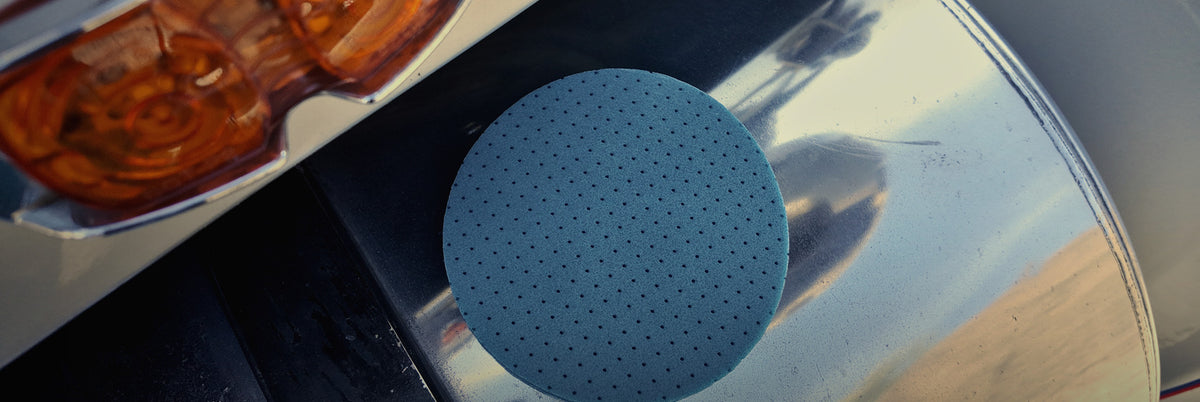
Find the right attachment for your setup: a 150 mm hook-and-loop backing pad with an M14 thread and centring pin, a flannel polishing ball with a 6 mm shank for cordless drills, and a 150 mm hook-and-loop hand sanding pad.

Polishing Attachments & Backing Pads

More on this topic Polishing Attachments & Backing Pads

A polishing backing plate isn’t just an accessory. It can make the difference between a tool that runs smoothly and one that vibrates. The DR.POLISH range has three options: an M14 fitting for a rotary polisher, a 6 mm shank for a cordless drill and a hand holder that doesn’t go on a machine at all.

M14 backing plates: the standard for rotary polishers

M14 is the standard thread for rotary polishers in Europe. Screw on the 150 mm hook-and-loop backing plate and tighten it by hand. The hook-and-loop surface holds the pad in place. Before touching the workpiece, run the machine briefly without load and check that it runs smoothly.

The centring pin makes the difference. Fit a pad by eye and it’s easy to be a millimetre off. At working speed, that’s enough to throw the machine out of balance: it vibrates, the finish comes out uneven and after an hour you’ll feel it in your wrists. The pin positions the pad exactly in the centre.

Match the backing plate to the job Large, heavily oxidised aluminium tanks need firm pressure. A rigid plastic base and heavy-duty hook-and-loop fastening won’t give under that pressure the way a soft backing plate will.

Cordless drill polishing attachment: the 6 mm shank

There’s one dedicated attachment in this range for a cordless drill or other drill: a 75 mm flannel polishing ball with a 6 mm round shank. Fit it into the chuck and run it at low to medium speed.

The shape is what makes it useful. On a curved surface, a flat polishing disc touches only at the edge, which can leave streaks and an uneven shine. The ball follows the contours for an even finish inside the wheel barrel, around exhaust bends and around wheel nuts. The drive shaft sits deep inside the soft flannel to keep bare metal from touching the wheel, even when you apply pressure or work at an angle.

Cordless drill polishing kits for paintwork and attachments for bare metal

The common eight- or eleven-piece kits are made for car paintwork. They come with foam pads in different grades of firmness and a backing plate with a hex shank. The pads are soft enough for clear coat and do a different job from the tools in this range.

The DR.POLISH range is designed for bare metal: flannel for a deep shine, a sturdy 150 mm backing plate for sanding and polishing discs, and a hand holder for places a machine can’t reach. Use the matching 150 mm hook-and-loop discs and a polish for bare metal.

The hand holder: designed for hand use only

The 150 mm hand sanding pad is for hand use only and must not be fitted to a rotary machine. It serves a different purpose. If you hold a sanding disc directly in your hand, your fingertips put more pressure on some spots than others, leaving an uneven sanding pattern. The pad spreads the pressure across the entire surface.

The foam core is firm enough to take pressure but flexible enough to follow the curve of a diesel tank without hard edges digging in. The material and hook-and-loop backing resist moisture and chemicals because wet sanding is used on trucks. The backing keeps its grip even when wet. The guide to refurbishing a truck wheel shows how to wet-sand step by step.

FAQs about Polishing Attachments & Backing Pads

Which polishing backing plate fits my machine?

It depends on the fitting. Nearly all rotary polishers in Europe have an M14 thread, so a 150 mm backing plate with that thread fits directly. Cordless drills and other drills have a chuck and need a round shank; ours is 6 mm. Random orbital sanders use their own backing plates, which need to match the machine’s orbit.

Can I polish alloy wheels with a cordless drill?

Yes, for curves and tight spots, use a flannel polishing ball. A cordless drill is too slow and not powerful enough for large, uninterrupted areas such as a diesel tank or a whole wheel barrel. Use a dedicated polisher for those. As a rule of thumb, if the area is larger than your palm, use a polisher.

Why does a polishing backing plate need a centring pin?

A pad fitted even one millimetre off-centre can throw the polisher out of balance at working speed. You’ll see it in the uneven finish and feel it in your wrists. The pin centres the pad so the machine runs smoothly. On a big tank job, that can make the difference between one hour and three.

How do I look after polishing backing plates and attachments?

After use, rinse with clean or warm water as appropriate and leave the parts to air-dry. Remove polish residue from the hook-and-loop surface from time to time, or it won’t grip as well. When changing discs, pull the old disc straight off rather than tugging it sideways, which can pull the backing away from the disc.

What speed should I use for polishing?

Use the polishing ball at low to medium speed with light pressure. Flannel is the softest option and brings out the final shine. With a polisher, choose the speed to suit the backing plate size, the pad and the material. Stay within the speed limits for both the machine and the attachment.

Can I fit the hand pad to a polishing machine?

No. The hand sanding pad is for hand use only. It has no machine fitting and isn’t designed to spin. For machine use, fit the M14 hook-and-loop backing plate, which takes the same 150 mm discs. That means you only need to buy one set of discs to work by hand and by machine.

Free delivery

Delivery to Austria and Germany is free on orders of €140 or more.

SUPPORT

Got a question or need something clarified? Just email us any time at: info@DR-POLISH.at

SECURE PAYMENTS

Pay by PayPal, credit card, Klarna or advance bank transfer. Payments are encrypted through Shopify Payments.